
Theo Otto · 4 September 2026
Unlocking Hidden Link Patterns Through Automated Outreach in Niche Markets
Link patterns represent recurring structures in backlink profiles that emerge when websites within specialized industries connect through shared content themes, audience overlaps, or supplier relationships. Researchers note that these patterns become visible once large datasets undergo systematic analysis, and automated outreach systems accelerate the discovery process by sending targeted messages to site owners based on algorithmic matching of domain authority signals and topical relevance. Data from digital marketing platforms shows that niche markets such as sustainable packaging, vintage watch restoration, and specialized medical equipment often contain clusters of sites that exchange links in non-obvious sequences rather than through direct reciprocal arrangements.
Mapping Link Ecosystems Within Specialized Industries
Analysts track how links form across micro-niches by scraping public directories, forum archives, and resource pages, then applying graph theory to identify central hubs and peripheral nodes. One study from the National Institute of Standards and Technology examined network structures in online technical communities and found that certain link patterns repeat every 18 to 24 months as new entrants join established information flows. Those patterns include three-site chains where an authority site links to a mid-tier blog that later references a newer resource, creating indirect value transfer that standard crawlers register only after multiple index updates.
Automated tools now parse these chains by monitoring changes in anchor text distributions and referral traffic sources over rolling 90-day windows. Observers report that the same software flags domains with sudden spikes in outbound links to complementary niches, allowing outreach sequences to begin before competitors detect the same opportunities. In September 2026, several industry conferences will present updated datasets on these temporal patterns, giving practitioners access to longitudinal records that span multiple market cycles.
Automation Tools and Their Integration With Outreach Workflows
Software platforms combine natural language generation with CRM features to produce personalized messages that reference specific pages on target sites, increasing response rates according to internal benchmarks shared by platform developers. The systems pull data from APIs that track domain age, historical link velocity, and topical overlap scores, then prioritize prospects whose link profiles show gaps that align with the outreach sender’s content assets. Because the process runs continuously, teams maintain consistent volume even when human staff focus on relationship follow-ups rather than initial contact drafting.
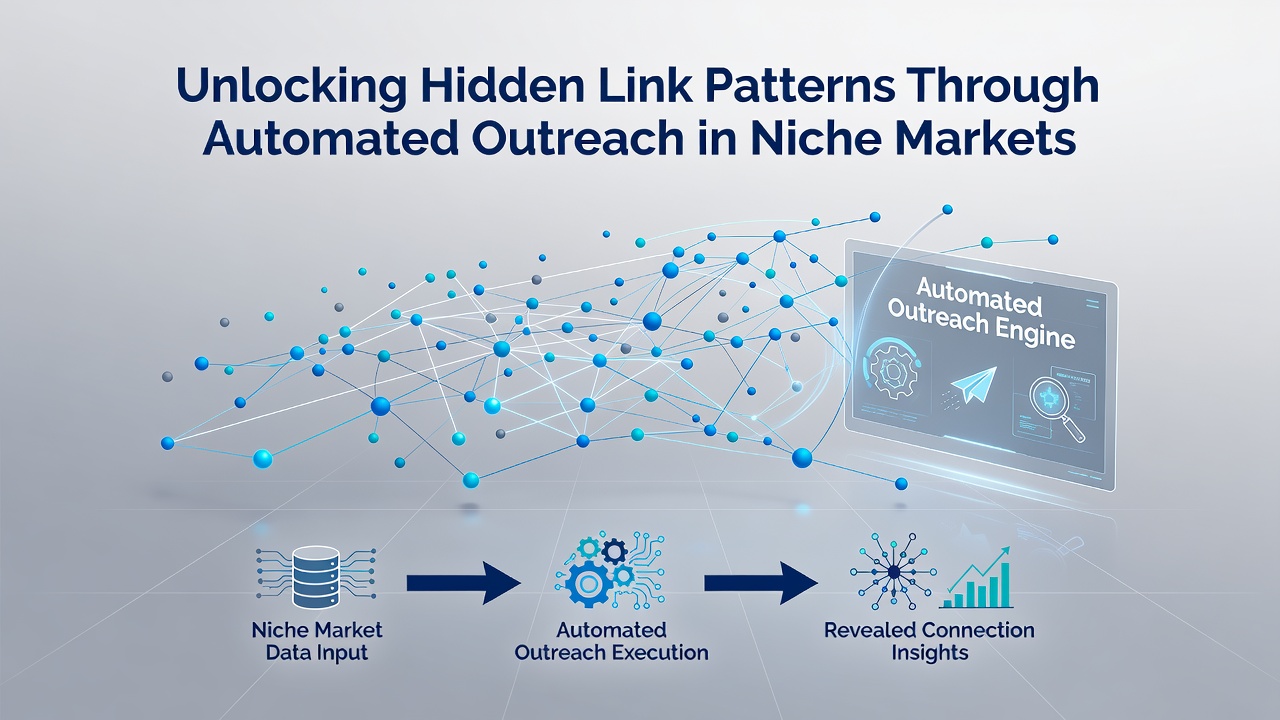
Integration with email verification services reduces bounce rates, while A/B testing modules measure which subject line variations generate replies within 48 hours. Research indicates that messages sent between Tuesday and Thursday during standard business hours in the recipient’s time zone achieve higher open rates across multiple niche categories. Teams that layer these timing rules atop pattern detection algorithms report sustained improvements in link acquisition metrics over six-month periods.
Practical Applications Across Distinct Market Segments
In the vintage automotive parts sector, automated systems identified clusters of forum threads where enthusiasts discussed restoration techniques and cross-referenced those discussions with resource lists on regional club websites. Outreach campaigns then contacted thread authors with offers to contribute updated technical guides, resulting in new contextual links that search engines associated with rising topical authority scores. Similar workflows appear in the botanical extract supply chain, where suppliers maintain resource pages that list testing laboratories; pattern analysis revealed which laboratories received links from overlapping regulatory compliance blogs, guiding outreach to those same laboratories with case studies on extraction purity standards.
Academic institutions have documented parallel dynamics in open-access publishing niches, where citation networks overlap with institutional repository links. Automated detection of these overlaps allows smaller journals to request inclusion on aggregator pages that already reference related open datasets, thereby expanding their own backlink profiles without manual directory submissions.
Measuring Outcomes and Adjusting Parameters
Performance tracking relies on dashboards that correlate outreach volume with changes in referring domain counts and organic search position shifts for target keywords. Data shows that campaigns maintaining a 12 percent response threshold over quarterly reviews sustain positive return on effort, whereas lower rates prompt recalibration of prospect scoring models. External validation comes from reports issued by the Australian Competition adn Consumer Commission on digital advertising practices, which emphasize transparent disclosure of automated communication in commercial outreach activities.
Conclusion
Automated outreach combined with pattern recognition continues to reshape how organizations acquire links inside narrowly defined markets. The methods rely on continuous data ingestion, algorithmic prioritization, and measured follow-up sequences that adapt to observed response behaviors. As September 2026 approaches, updated datasets from multiple research bodies will provide fresh benchmarks for evaluating these techniques across additional industry verticals.